
Worry About Going Over Your Renovation Budget?


A renovation rarely goes over budget because of one dramatic mistake. More
often, it happens through dozens of small decisions - a tile upgrade here, extra carpentry there, one lighting change that triggers rewiring, and a layout tweak that affects everything after it. A good home renovation budget planner helps you catch those decisions early, before they turn into stress, delays, or compromises you did not expect.
For homeowners, budgeting is not just about setting a cap. It is about matching your priorities to the way you actually live. A family renovating a resale flat will budget very differently from a couple fitting out a new BTO, even if the total spend looks similar on paper. The right plan gives you clarity on where to invest, where to simplify, and where to leave some room for change.
What a home renovation budget planner should really do
A useful budget planner is more than a spreadsheet with numbers. It should help you separate essential works from optional upgrades, compare quotes fairly, and understand how one decision affects another. That matters because renovation costs are interconnected. If you decide on custom carpentry across the living room, for example, your material choice, electrical points, internal fittings, and even painting scope may all shift.
The planner should also reflect the reality of the property type. HDB flats, condominiums, and landed homes often come with different technical requirements, approval processes, and site conditions. Older homes may need more preparatory work, while newer units may allow you to focus more on finishes and storage. A realistic budget starts with these fundamentals, not with mood board inspiration alone.
Start with the non-negotiables
Before you think about feature walls or designer light fittings, identify the works your home genuinely needs. In most projects, these will include demolition, flooring, electrical work, plumbing, painting, and core carpentry. Kitchens and bathrooms typically take up a larger share of the budget because they combine wet works, fittings, appliances, and detailed joinery.
This is where many homeowners underestimate costs. They may set aside a healthy sum for visible finishes but forget practical requirements such as hacking, debris removal, waterproofing, subfloor levelling, or replacing ageing pipes. These are not glamorous line items, but they have a direct impact on comfort, durability, and safety.
If your property is older, non-negotiables may also include rectification works. Uneven walls, concealed water damage, outdated wiring, and poorly planned layouts can all add cost. It is better to account for these early than to discover them halfway through the project, when timelines are tighter and choices become more limited.
Break the budget into clear zones
One of the simplest ways to make your budget more accurate is to group costs by area and purpose. Instead of thinking about the home as one large number, divide it into practical categories such as structural works, wet areas, carpentry, finishes, fixtures, appliances, and furnishings.
This approach makes decision-making easier. If your kitchen requires heavy investment because you cook daily and need strong storage, you may choose more restrained finishes in bedrooms. If the living area is the heart of the home, it may justify custom built-ins or better lighting design, while guest spaces can remain simpler.
A zoned budget also keeps expectations grounded. It is common to want premium materials in every room, but not every area needs the same level of specification. The trick is to spend where performance and daily use matter most. Quartz worktops, durable laminates, soft-close hardware, and well-planned storage often give better long-term value than purely decorative upgrades.
Leave room for the costs you cannot fully predict
Even the best-planned renovation needs contingency. That is not a sign of poor planning. It is a sign that you understand how homes work once walls are opened up and site conditions become clearer.
A sensible contingency protects you from making rushed decisions later. If you discover hidden defects, decide to add electrical points after seeing the layout in real scale, or need to adjust materials because of lead times, that reserve gives you breathing room. Without it, every unexpected item feels like a crisis.
How much you reserve depends on the project. A straightforward refresh in a newer home may require less contingency than a full overhaul of an older resale property. The more unknowns in the site condition, the more important that buffer becomes.
Design choices that change the budget quickly
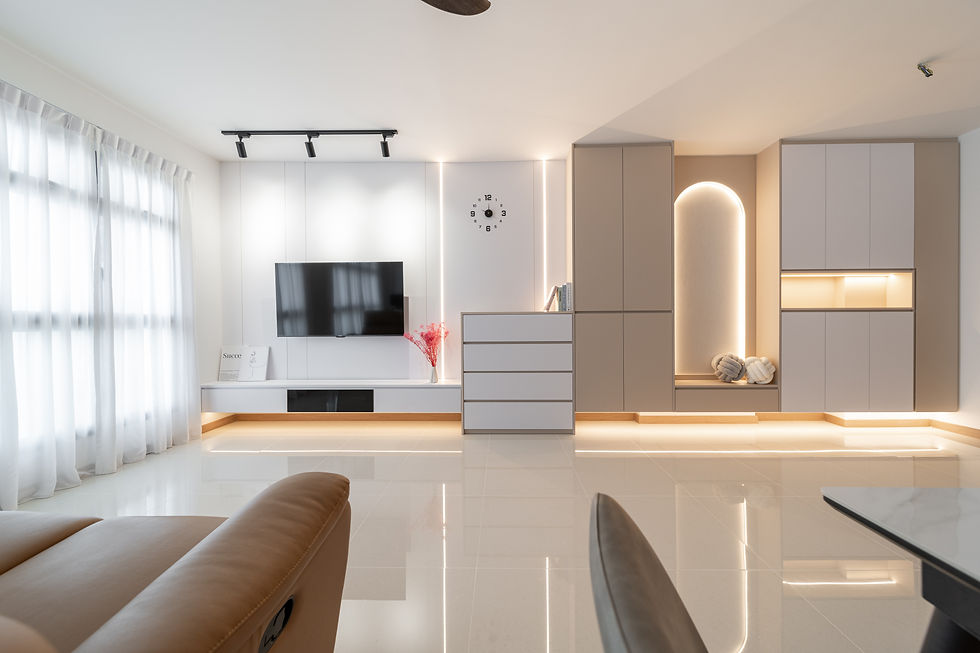
Some selections carry more weight than they first appear. Custom carpentry is a common example. It can transform storage, improve proportions, and create a polished finish, but it also has a meaningful impact on cost. The same goes for reconfiguring walls, upgrading bathroom finishes, or choosing materials that require more specialised installation.
This does not mean those choices are wrong. It means they should be intentional. If you are deciding between a larger wardrobe and a more elaborate TV feature, ask which one improves daily living more. If you are comparing tiles, look beyond the showroom effect and think about maintenance, slip resistance, and how the colour will sit in your lighting conditions.
Good budgeting is rarely about choosing the cheapest option. It is about selecting the right specification for the way you use the space.
Why quotes can look similar but mean different things
A common budgeting problem is comparing quotations that are not structured the same way. One may appear lower, but include fewer materials, fewer site visits, less detailed carpentry internals, or limited project coordination. Another may price more comprehensively, which can make it look higher at first glance while actually reducing surprises later.
A proper planner helps you compare scope, not just totals. Are appliances included? Is painting based on the whole home or selected rooms only? Are electrical points, lighting installation, haulage, and disposal clearly stated? Does the quote account for design development and revisions, or only basic drawings?
For homeowners who want a smoother experience, this level of clarity matters. Renovation is not only a purchasing decision. It is also an execution process, and hidden gaps in scope often surface when work is already underway.
A budget should support the layout, not fight it
Some of the best renovation decisions are not the most expensive. They are the ones that improve how the home functions. Better circulation, smarter storage, stronger zoning between shared and private areas, and cleaner visual lines can make a modest budget feel far more successful.
This is especially relevant in Singapore homes, where every square foot matters. A well-planned layout can reduce the need for excessive furniture, make a compact flat feel calmer, and help natural light move more effectively through the space. In practical terms, that means your budget works harder because design decisions are solving multiple problems at once.
This is where professional planning adds real value. When layout, materials, and budget are considered together, homeowners are less likely to spend heavily on fixes that could have been avoided at design stage.
How to keep your renovation budget under control during the project
A strong start helps, but budget discipline also matters once work begins. Changes during renovation are one of the biggest reasons costs increase. Sometimes they are necessary, but often they happen because decisions were left too late.
Finalise as much as possible before site work starts. Confirm your material selections, review carpentry drawings carefully, and be realistic about what you want completed within the agreed scope. Last-minute additions tend to cost more because they affect scheduling, procurement, and coordination.
It also helps to keep one running budget document throughout the job. Every approved change should be recorded clearly so you always know your current committed spend. That visibility reduces the risk of small extras accumulating quietly in the background.
For homeowners who want both design confidence and practical control, working with an experienced design-and-build team can make this process far more manageable. A coordinated approach reduces guesswork, keeps decisions aligned, and makes it easier to balance aesthetic ambition with responsible spending.
The smartest budget is the one built around your life
There is no single ideal renovation budget because every home has different priorities. Some households need child-friendly materials and heavy-duty storage. Others care more about open entertaining space, a refined kitchen, or a calm master suite. The right home renovation budget planner brings those priorities into focus and gives them structure.
That is what turns a renovation from a series of expensive choices into a home that feels considered, durable, and comfortable to live in. If your budget reflects how you cook, rest, host, store, and move through the space, it becomes much easier to spend with confidence - and much harder to regret where the money went.
A well-planned renovation should leave you with more than a good-looking result. It should leave you with the quiet reassurance that every pound spent had a purpose.

Comments