
Which Details Are Worth Spending On at Home?


A renovation budget can disappear quickly once carpentry, tiles, lighting and appliances enter the picture. The details worth spending on are not always the ones that make the strongest impression in a showroom. They are the parts of your home you touch, rely on and live with every day - often long after a decorative feature has lost its novelty.
For HDB flats, condominiums and landed homes, the best investment is usually not about choosing the most expensive finish. It is about putting more of the budget into sound planning, durable construction and the right specifications for your household. A well-considered home should look refined at handover, but it should also remain comfortable, organised and easy to maintain for years.
Start with the layout, not the finishes
Before comparing laminates or selecting a feature wall, make sure the floor plan supports the way you live. This is one of the most valuable places to invest because correcting a poor layout after renovation is disruptive and costly.
Consider how your household moves through the home in the morning, where shopping bags are placed when you arrive, whether two people can work in the kitchen at once, and how often you host family or friends. A young couple may value a study that can later become a nursery. A family with school-going children may need a dining area that doubles as a practical homework zone. For resale homes, revising an inherited layout can make an older flat feel far more spacious without increasing its footprint.
Good space planning also gives storage a clear place from the start. Rather than adding cabinets wherever there is an empty wall, an experienced designer can assess circulation, door swings, natural light and furniture proportions together. This prevents a home from becoming visually crowded simply because every available corner has been filled.
Worth spending details that protect the home
Some of the most important renovation decisions are largely hidden once the project is complete. They may not feature prominently in photographs, but they protect the comfort, safety and long-term condition of the home.
Waterproofing and bathroom preparation
Bathrooms are high-use spaces, especially in households with children, elderly parents or frequent guests. Proper waterproofing, floor preparation and drainage gradients deserve careful attention. A shower area that drains slowly or allows water to migrate beyond its intended zone can create persistent maintenance issues.
It is worth selecting suitable non-slip floor tiles as well. The aim is not to make every bathroom feel clinical, but to balance visual appeal with daily safety. Smaller-format tiles can offer more grout lines for grip, while larger tiles can create a cleaner visual effect. The right choice depends on the bathroom layout, the level of water exposure and who will be using the space.
Electrical planning and lighting layers
A single ceiling light in each room is rarely enough for a comfortable home. Thoughtful lighting combines ambient light for general visibility, task lighting for activities such as food preparation and grooming, and softer accent lighting for atmosphere.
Spend time deciding where power points, switches and data points should sit before work begins. Think beyond the immediate furniture plan. You may later need charging points beside the sofa, a concealed socket for a robot vacuum, power inside a pantry cabinet, or convenient outlets near a future study desk. Electrical changes after handover often involve opening completed surfaces, so accurate planning at the outset is particularly worthwhile.
In the kitchen, under-cabinet lighting can make food preparation safer and more pleasant. In bedrooms, bedside switching avoids the daily inconvenience of crossing a dark room to turn off the lights. These are modest details individually, but they add up to a home that works intuitively.
Hardware, hinges and internal cabinet fittings
Cabinet doors and drawers are opened hundreds of times each year. This makes quality hinges, drawer runners and carefully fitted hardware more valuable than a premium-looking exterior finish paired with weak mechanisms.
Soft-closing systems, full-extension drawers and stable internal fittings can make a meaningful difference to daily use. In a kitchen, deep drawers may be more practical than low cabinets with fixed shelves, particularly for pots and dry goods. In wardrobes, adjustable shelving and dedicated compartments can accommodate changing needs more easily than a rigid internal layout.
There is still a budget decision to make. Not every cabinet needs an elaborate pull-out mechanism, and too many specialised accessories can consume space as well as money. Prioritise fittings for the areas you use most: the cooking zone, cleaning supplies, pantry storage and frequently accessed wardrobe sections.
Invest in storage that suits your actual habits
Storage is often described as a must-have, but more storage is not automatically better. The best solution is storage with a purpose. A full-height cabinet is useful only if you can reach, see and organise what it contains.
Begin with an honest inventory of what must be stored. Consider luggage, seasonal items, cleaning equipment, appliances, shoes, documents, hobby supplies and children’s belongings. Then assign each category a logical home. A well-designed entrance cabinet can contain shoes and everyday items without making the foyer feel narrow. A service yard may benefit from organised utility storage, while a bay window platform may only be worthwhile if it provides accessible capacity rather than creating an awkward ledge.
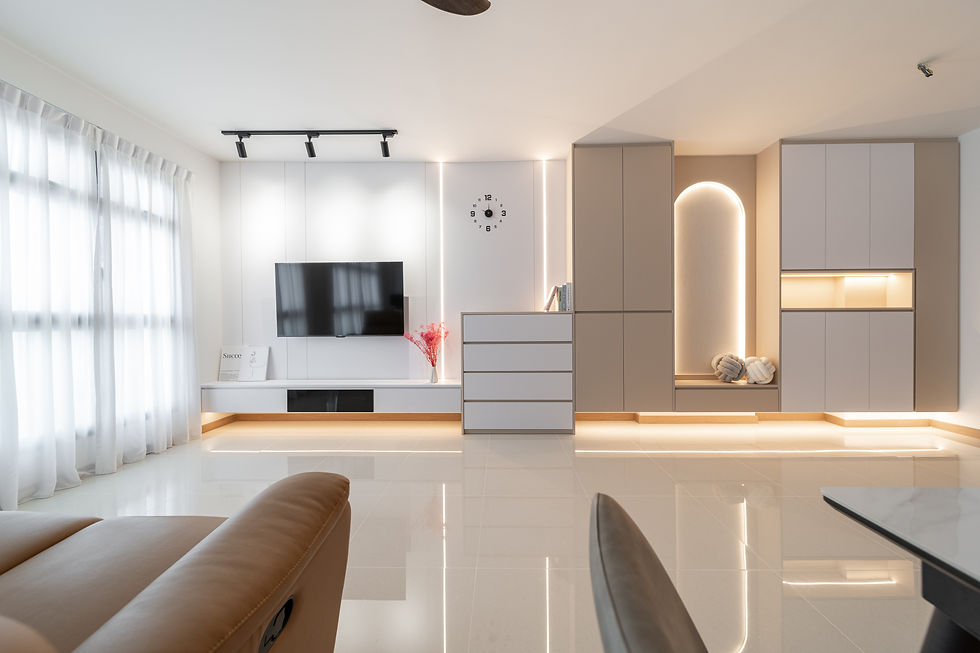
For compact Singapore homes, built-in carpentry can be especially effective when it follows the room’s architecture and leaves adequate circulation around furniture. However, a fully built-in home can be less flexible if your family’s needs change. Where appropriate, combine fixed storage for essentials with movable pieces that can adapt over time.
Choose materials by location, not by trend
Material selection is where a practical budget can either be protected or quietly stretched. A finish should be chosen for the conditions it will face, not solely for its appearance under showroom lighting.
Kitchen counters need to withstand heat, staining and regular cleaning. Cabinet fronts near the sink and hob should cope with moisture and frequent handling. Bathroom vanity materials require proper edge treatment and suitable finishes in humid conditions. For families with pets or young children, scratch resistance and ease of cleaning may matter more than a delicate surface with a dramatic texture.
This does not mean every room needs the most premium material available. Lower-touch decorative areas may allow greater freedom to choose an aesthetic finish within budget. The key is to allocate spending according to wear. Put performance first in hardworking zones, then use colour, texture and styling to bring personality into the home.
Do not underfund kitchen functionality
The kitchen is often one of the highest-value areas in a renovation because it combines plumbing, electrical work, carpentry, appliances and daily wear. Careful planning here is worth more than simply enlarging the kitchen visually.
Ensure there is enough worktop space between the sink and hob, and allow room for appliance doors and drawers to open safely. Plan for ventilation, bins, water filtration if required and locations for appliances that remain on the counter. A beautiful kitchen can become frustrating if the rice cooker, coffee machine and drying rack have nowhere practical to go.
The right worktop and cabinet configuration depends on cooking habits. A household that prepares meals daily may benefit from generous drawer storage and a durable work surface. A household that mostly orders in may prefer a compact kitchen with more emphasis on an inviting dining area. Design should reflect real routines, not a one-size-fits-all idea of luxury.
Reserve a contingency for what the walls reveal
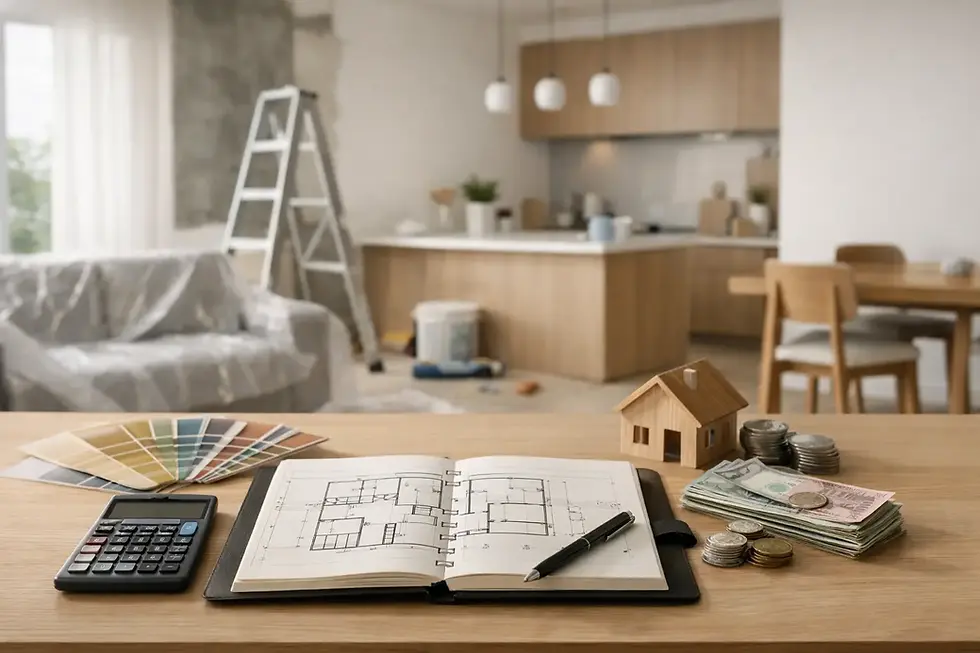
Particularly in resale renovations, existing conditions can affect the final budget. Concealed pipe issues, uneven walls, ageing electrical systems or unexpected repair requirements may only become visible once demolition begins. Setting aside a sensible contingency allows necessary work to be addressed without compromising the essentials later.
Transparent discussions before renovation help homeowners distinguish between planned upgrades, optional additions and genuine site-related needs. This is also why detailed scope planning matters. When materials, workmanship expectations and project stages are clearly understood, it is easier to make confident choices and avoid last-minute substitutions.
Design details that improve how a home feels
After practical priorities are covered, a few carefully chosen finishing details can elevate the entire home. Well-proportioned curtains or blinds, layered lighting, considered wall colours and a cohesive palette can make even a compact flat feel calmer and more generous.
Rather than spreading the budget across many competing statement features, choose one or two areas that deserve emphasis. It could be a warm dining light, a textured TV feature, a tailored entrance treatment or a quietly elegant master bedroom. The most enduring interiors feel intentional because every detail supports a clear overall direction.
A worthwhile renovation is measured in daily ease as much as visual impact. When you are planning your home, focus first on the details that remove friction from ordinary routines. With thoughtful design, durable materials and disciplined execution, those small decisions become the reason your home continues to feel good long after the renovation dust has settled.

Comments